
How Greenworks Turned a Lawn Mower Into a Backyard Lifestyle Brand
A lawn mower does not sound like the kind of product that should perform well on social media.
It is large, expensive, seasonal, and usually stored in the back of a garage. It does not have the instant visual appeal of beauty products, fashion, or food. Most people do not wake up excited to watch someone mow a lawn.
And yet Greenworks has found a way to make outdoor power equipment feel surprisingly relevant to modern content.
The company behind the brand, Globe Group, generated RMB 5.426 billion in revenue in 2024, an increase of 17.52% from the previous year. Revenue from its own brands rose from RMB 2.837 billion in 2021 to RMB 3.743 billion in 2024, with more than 98% coming from overseas markets.
That growth was not built around one viral lawn mower.
Greenworks created a much larger idea: a battery-powered system that can gradually take over an entire garage.
A customer may begin with a mower. Later, the same battery can power a leaf blower, hedge trimmer, chainsaw, pressure washer, or snow blower. One purchase creates a reason to make the next purchase from the same brand.
But the product ecosystem only explains part of the story.
Greenworks has also learned how to turn a category built around chores into content about time, freedom, outdoor living, and the satisfaction of a better backyard.
That is where the brand becomes much more interesting.
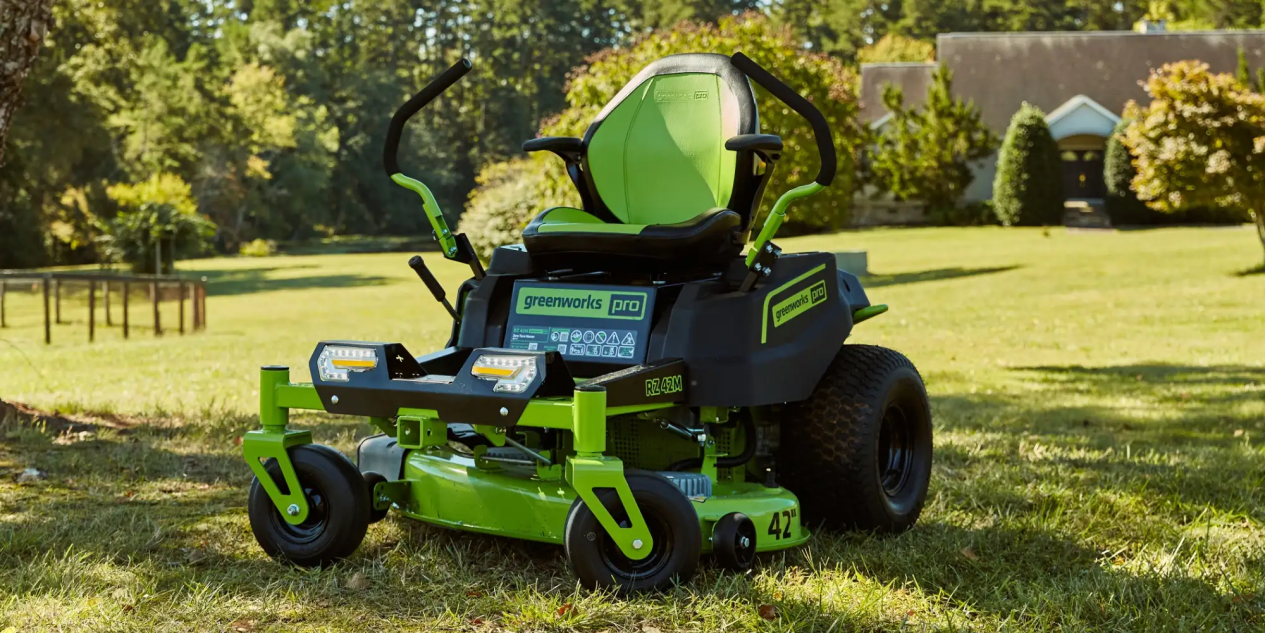
The Backyard Is More Than a Patch of Grass
In many American and European homes, the yard is not an occasional leisure space.
It is a year-round responsibility.
Spring means mowing. Summer means trimming. Fall means clearing leaves. Winter may mean removing snow. Families use outdoor spaces for barbecues, children’s play, gardening, entertaining, and relaxing, but keeping those spaces usable requires constant maintenance.
For decades, that work was powered mainly by gas.
Gas mowers, chainsaws, and leaf blowers offered the performance homeowners expected, especially for larger properties. They also came with fuel, oil, engine maintenance, loud starts, fumes, and equipment that could feel unnecessarily complicated for routine residential use.
As battery technology improved, the consumer question began to change.
Homeowners were no longer asking whether electric tools could work at all. They were asking whether electric tools could deliver enough power while being quieter, cleaner, lighter, and easier to use.
Greenworks entered that shift early.
Globe Group was founded in 2002 and began investing in new-energy outdoor power equipment in 2007, long before battery-powered lawn tools became a mainstream category. The company continued developing lithium batteries, brushless motors, and electronic control systems, then pushed those products into international markets.
The timing mattered, but Greenworks did not grow simply because it sold electric equipment.
Its more important move was making the equipment work together.
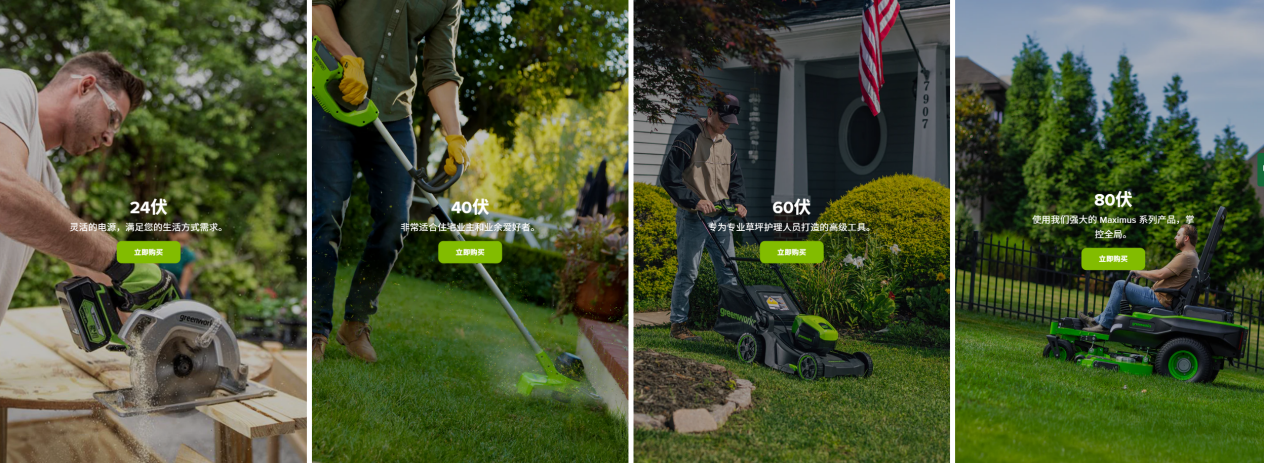
One Battery Can Change the Entire Purchase Journey
The outdoor power equipment aisle is crowded.
Traditional brands have held shelf space and consumer trust for decades. A new company cannot easily win by adding one more feature to a mower or making a leaf blower slightly lighter.
For many homeowners, the bigger problem is not a lack of features. It is the growing complexity inside the garage.
A mower has one power system. A trimmer has another. A chainsaw may require different fuel or a different battery. Every additional tool can mean another charger, another maintenance routine, and another piece of equipment to manage.
Greenworks addressed that friction through shared battery platforms.
Within the same voltage system, one battery can be used across multiple tools. A customer who already owns a Greenworks mower may be able to purchase a compatible blower, trimmer, chainsaw, or pressure washer without starting from zero.
That lowers the cost of adding a new product, but the real advantage is convenience.
Once the battery and charger are already in the garage, the next Greenworks purchase feels easier. The customer is no longer evaluating every tool as a completely separate decision. They are expanding a system they already understand.
From a business perspective, this is a powerful model.
The first product gets the brand into the home. The battery helps keep it there.
That same logic also creates strong content opportunities. A video does not need to focus on one isolated machine. It can show an entire seasonal routine powered by one battery platform: mowing in spring, trimming in summer, clearing leaves in fall, and removing snow in winter.
The product story becomes larger than a specification sheet.
It becomes a picture of a simpler home.
Greenworks Is Not Really Selling Yard Work
The most effective outdoor-equipment content rarely begins with torque, voltage, cutting width, or battery capacity.
It begins with something the viewer already feels.
“I do not want to spend my Saturday mowing.”
“I love my garden, but I hate the repetitive maintenance.”
“I want the yard to look good without giving up half my weekend.”
That emotional shift is especially important for robotic lawn mowers.
A robot mower is technically impressive, but the technology is not the real story. The real story is what the owner gets to do while the machine works.
They can spend time with family. Work on the garden. Sit on the patio. Handle another project. Or simply stop thinking about the lawn for a while.
This is why Greenworks’ AiMowbot C20 is naturally suited to lifestyle-driven content.
The product creates movement on camera. It produces a visible result. It can be filmed in a real backyard. It also gives the person in the video a reason to leave the frame and do something more interesting.
That last part is important.
Many product videos focus entirely on the object. Greenworks content often works better when the object becomes secondary. The viewer sees the mower doing the repetitive work while the homeowner enjoys the outcome.
The product becomes the reason life looks easier.
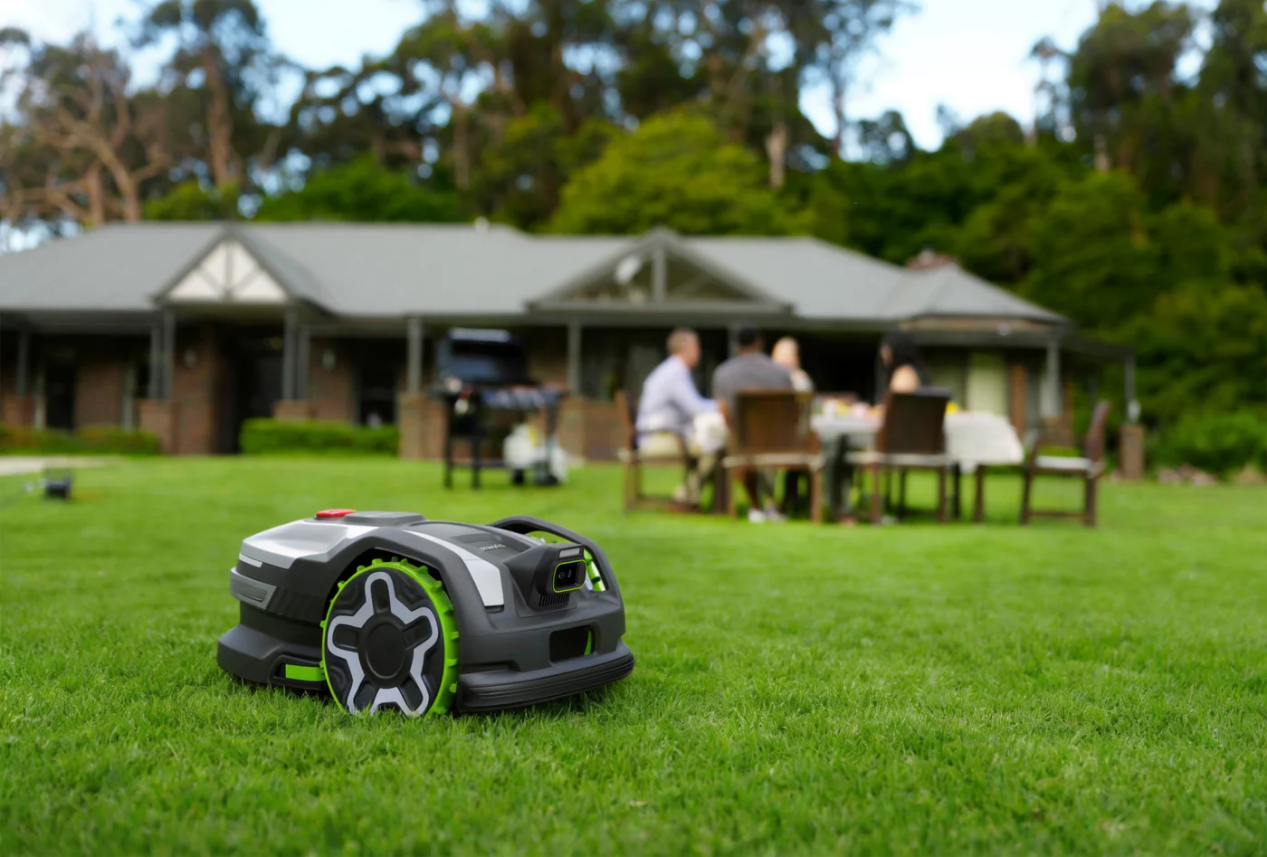
TikTok Sold the Value of Getting Your Weekend Back
A TikTok from the DIY couple FairlyFixer opened with a line that immediately captured the product’s appeal:
“I like having a beautiful lawn. I like not mowing it even more.”
The line works because it contains both sides of the audience’s problem.
People want a well-maintained yard. They do not necessarily enjoy the work required to maintain it.
The video then moves directly into the AiMowbot C20 operating across the lawn. The machine handles the mowing while the couple uses the yard as a living space rather than a worksite.
There is no need for a long technical explanation.
The product value is visible.
The grass is being maintained. The homeowners are free. The machine is not presented as a futuristic gadget sitting in a laboratory. It is shown performing an annoying household task in an ordinary backyard.
That makes the content feel attainable.
The strongest part of the video is not the mower’s navigation system or autonomous operation. It is the contrast between what the viewer expects yard maintenance to look like and what it could look like instead.
Traditional version: a person pushes a mower for an hour.
Greenworks version: the lawn gets handled in the background.
The content creates demand among viewers who may never have searched for a robotic mower. They already understand the problem because they experience it every week.
The video simply introduces a new answer.
https://www.tiktok.com/@fairlyfixer/video/7634591386309840158
The Same Product Can Tell a Completely Different Story
Nikki Plants Things approached the mower from another angle.
Her opening was equally direct:
“I love gardening. I hate mowing.”
That distinction matters.
For a general homeowner, the robot mower may represent fewer chores. For a gardening audience, it represents more time for the parts of outdoor life they actually enjoy.
Her video shows the AiMowbot C20 moving from unboxing and setup into real operation. The mower handles routine lawn maintenance while she focuses on plants, garden design, and the more creative parts of the space.
The product is the same, but the emotional payoff is different.
FairlyFixer’s content is about reclaiming family and leisure time.
Nikki’s content is about protecting time for a hobby.
That is a useful reminder for any product with a broad target audience: repeating the same selling point does not require repeating the same story.
“Saving time” can mean several things.
For a parent, it may mean spending more time with the family.
For a gardener, it may mean caring for plants instead of cutting grass.
For a busy professional, it may mean one fewer task on the weekend.
For an older homeowner, it may mean avoiding physically demanding work.
A strong campaign gives each creator room to translate the benefit into the language of their own audience.
https://www.tiktok.com/@nikkiplantsthings/video/7613846490649234701
The Backyard Is Part of the Production
Greenworks also shows why physical context matters when choosing the right person to demonstrate a product.
A robotic lawn mower cannot be convincingly reviewed from a studio desk.
The content needs a real lawn. It needs space to show movement, navigation, installation, obstacles, boundaries, and the condition of the grass before and after use.
That means audience size alone is not enough.
A creator may have strong average views but no suitable filming environment. Another may have a smaller following but own a garden, understand outdoor maintenance, and already publish DIY, home improvement, landscaping, or technology content.
For this category, the second person may produce much more believable work.
The setting is not just a background.
It is part of the evidence.
Viewers want to see whether the machine can handle a real yard, how it moves around furniture or pets, how difficult it is to set up, and whether the finished lawn looks noticeably different.
The more expensive and unfamiliar the product, the more important that evidence becomes.
YouTube Is Where Curiosity Becomes Confidence
TikTok can make a robotic lawn mower look desirable.
It cannot answer every question required for a high-ticket purchase.
Once a viewer becomes interested, the questions become more practical:
How difficult is installation?
How does the mapping process work?
Can it detect obstacles?
What happens near edges?
How does it perform on an actual lawn?
Does it require constant supervision?
Is it worth the price?
These are search questions, and YouTube is often where consumers go to answer them.
Greenworks’ collaboration with technology channel KhanFlicks demonstrates the role of long-form video in that process.
The review covers the full experience: unboxing, installation, map creation, real mowing, obstacle testing, and general use.
One of the most memorable moments places the AiMowbot C20 on the lawn alongside a robotic dog. While the robot dog moves unpredictably, the mower continues working and navigating around the environment.
The scene is more effective than a list of sensor specifications.
It makes the obstacle-avoidance feature visible, adds entertainment value, and gives viewers something memorable to discuss.
This is an important difference between explaining a feature and proving it.
A creator can say a mower has intelligent obstacle detection.
Or the creator can create a situation in which the mower has to demonstrate it.
The second version is more engaging and more credible.
https://www.youtube.com/watch?v=EyTRkGlgmtM
Long-form content also gives the reviewer room to mention limitations, setup requirements, and conditions that may affect performance.
That honesty matters.
A shopper considering an expensive piece of outdoor equipment does not necessarily expect perfection. They want to understand whether the product fits their yard, their routine, and their tolerance for setup.
The purpose of the video is not to convince every viewer to buy.
It is to help the right homeowner make a more confident decision.
Short-Form and Long-Form Content Do Different Jobs
Greenworks’ platform strategy works because TikTok and YouTube are not being asked to accomplish the same task.
TikTok creates the desire.
It shows a cleaner lawn, an easier weekend, and a machine quietly handling an unpleasant job. The viewer understands the lifestyle benefit before fully understanding the technology.
YouTube handles the doubt.
It explains setup, performance, limitations, and real-world behavior. It gives potential buyers enough detail to decide whether the product fits their property.
The brand website and retail channels then complete the path.
A consumer may discover the mower through a short video, search for reviews on YouTube, compare models on Amazon, inspect the product at Lowe’s or Costco, and finally purchase through the retailer they trust most.
For high-ticket products, this is often how conversion actually works.
No single video needs to carry the entire sale.
Each piece of content moves the viewer one step forward.
UGC Keeps the Product Story From Feeling Finished
Once a brand has enough customers, its content no longer needs to come only from paid partnerships or official accounts.
During Earth Month in 2025, Greenworks launched its “Why Green & Me” campaign, encouraging customers to share short videos about their greener lifestyles and the reasons they chose electric outdoor tools. Participants had the chance to win a full set of 80V Greenworks equipment.
The campaign gave users a reason to talk about more than the product.
They could discuss quieter neighborhoods, reduced gas use, easier maintenance, family routines, gardening, sustainability, or the convenience of a battery-powered system.
That creates a wider range of stories than a brand could produce alone.
It also fills an important gap in the purchase journey.
Professional content can make a product look appealing. Customer content makes ownership feel normal.
When viewers repeatedly see the same tool being used in different homes, climates, yards, and routines, the category becomes easier to trust.
The product no longer looks like a futuristic experiment.
It looks like something people already live with.
The Best Greenworks Content Is Not Really About Machines
Greenworks has built a large business around physical equipment, but its strongest content ideas are deeply human.
The videos are about getting time back.
They are about enjoying a garden without spending hours on repetitive maintenance.
They are about replacing noisy, complicated gas equipment with tools that are easier to start and easier to manage.
They are about building a garage where one battery works across several seasons.
That is why the brand can generate compelling content from a category that initially seems difficult for social media.
The machine creates the proof.
The lifestyle creates the story.
This distinction applies far beyond lawn care.
When a product looks too technical, too ordinary, or too functional for entertaining content, the answer is rarely to explain more specifications.
The better question is: what changes in someone’s life after this product starts working?
With Greenworks, the answer is easy to see.
The lawn remains maintained.
The garage becomes simpler.
The weekend opens up.
InsMark Recap
Greenworks did not build its overseas growth around a single mower.
It built a connected outdoor ecosystem, using one battery platform to link multiple products and turn an initial purchase into a long-term relationship.
Its content follows the same logic.
TikTok introduces the emotional benefit. Gardening and DIY creators adapt that benefit to different audiences. YouTube reviewers test the product in depth and reduce purchase anxiety. UGC shows how the tools fit into real homes and real routines.
Together, those layers help Greenworks move from product awareness to household adoption.
The larger lesson is simple: even the most practical category can become compelling when the story moves beyond the equipment.
Greenworks may sell lawn mowers, leaf blowers, trimmers, chainsaws, and snow blowers.
What people are really buying is a quieter yard, a simpler garage, and more time to enjoy the space they worked so hard to create.
Backup: info@insmarkmcns.com (kept during transition)
@insmarkmcn.com.
To verify a staff email, please contact info@insmarkmcn.comCN | Guangzhou (Headquarters) Room 1606, Tower B, Nimble Center, CBD, Guangzhou, China
HK | Hong Kong (Headquarters) The Centrium, 60 Wyndham Street, Central, HKCentral, Central, Hong Kong SAR
US | New York DE | Berlin