
Enabot Put Wheels on a Camera. Creators Turned It Into a Family Member.
Most home cameras have one major limitation.
They can only show you what happens in front of them.
If your cat leaves the room, the camera keeps watching the sofa.
If your child comes home through another door, you may miss it.
If an older family member needs help somewhere outside the frame, the camera cannot go looking.
Enabot approached the problem differently.
It gave the camera wheels.
Then it added two-way communication, remote control, interaction, and AI capabilities, turning a stationary home device into something that could move through a family's living space.
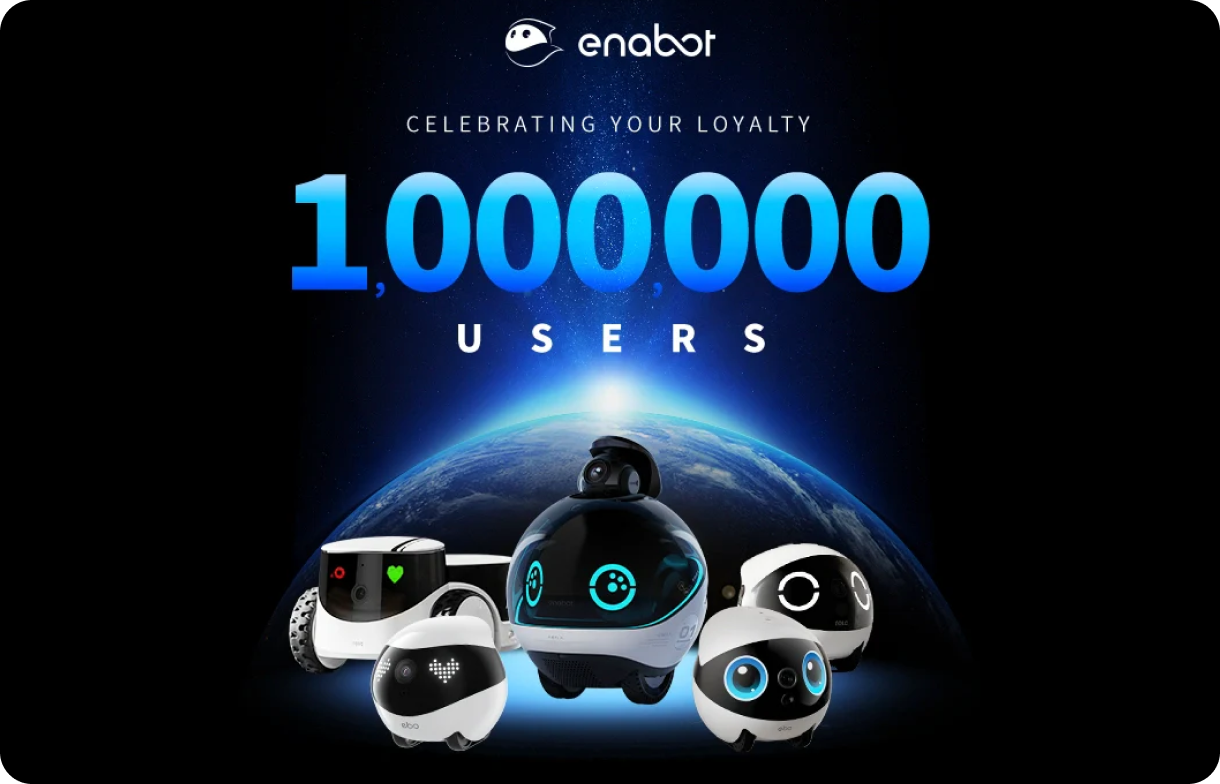
The Shenzhen-based company now sells products in more than 160 countries and regions. Overseas markets account for roughly 70% of its revenue, and its cumulative user base is approaching 1.5 million.
At a time when much of the robotics industry is focused on humanoid robots and distant visions of the future, Enabot has already put robots inside real homes.
For creators, however, the most interesting part of this story is not the mobility system or the camera.
It is what happened once creators stopped presenting Enabot as a piece of hardware.
They gave it a name.
A personality.
A place in the family.
And in some videos, the robot became a character before it became a product.
A New Category Usually Has an Explanation Problem
Enabot was founded in Shenzhen in 2018 by Zhu Hong, who holds a PhD in electronics from the Hong Kong University of Science and Technology.
She had years of experience in the robotics industry, including roles as executive assistant to the chairman of DJI and rotating CEO of the Songshan Lake Robotics Industry Base.
The company began developing product prototypes in 2018.
At the time, home-security cameras were already common. But fixed cameras had an obvious weakness: they could only monitor one area.
That limitation was especially frustrating for pet owners.
Cats and dogs do not remain inside a carefully selected camera frame. When owners opened an app while away from home, they might see an empty floor, a sofa, or a room with no pet in sight.
Enabot found its starting point in that frustration.
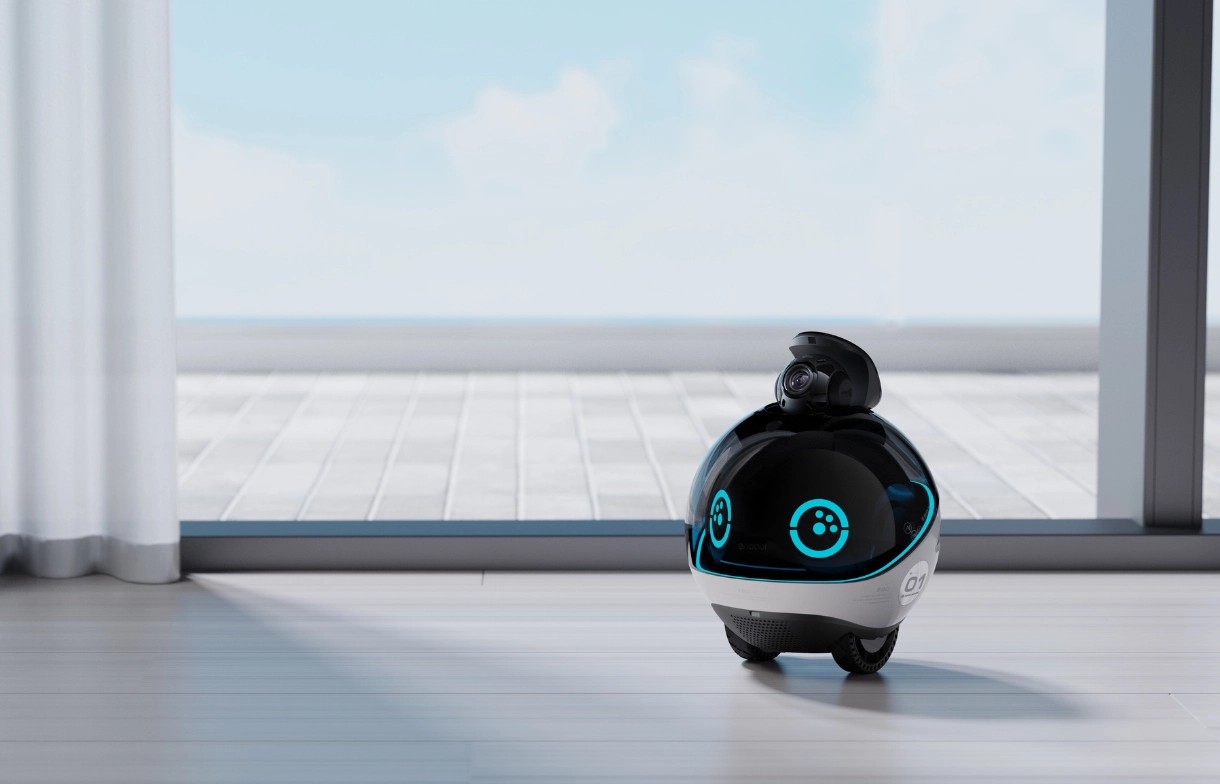
It combined a mobile base, camera, remote control, and two-way voice communication, allowing users to move through their homes remotely, find their pets, check their condition, and interact with them.
The product did more than improve home monitoring.
It gave users a way to re-enter their home environment while they were physically somewhere else.
In 2019, Enabot launched its first mobile robot, EBO S, on Kickstarter. The campaign attracted more than 2,400 supporters and raised over $400,000.
That crowdfunding result validated the initial demand.
It also suggested something bigger: pet companionship could be the entry point, but remote connection to home life was the broader category.
The Product Expanded Because the Home Kept Giving It New Jobs
A home is a difficult environment for a robot.
There are carpets, thresholds, cables, pet hair, inconsistent Wi-Fi, changing light, and furniture arranged without robots in mind.
Enabot continued improving mobility, latency, image quality, night vision, and automatic charging based on real-world use. It also introduced functions such as pet recognition, movement detection, and AI interaction.
As the technology improved, the product's role expanded.
At first, it helped owners find and check on pets.
Then it began to function as a mobile home-security device, moving between different areas instead of watching one fixed angle.
Later, two-way audio and video made it a communication tool.
Parents traveling for work could interact with their children.
Adult children could check on older family members.
Partners living apart could remain more present in each other's homes.
As AI capabilities developed, the product began moving toward the role of a home assistant. Users could give natural-language instructions such as:
“Go find the dog.”
“Take a picture.”
“Come back and tell me what happened.”
The interaction was gradually shifting from remote control toward conversation and cooperation.
But this created another challenge.
How do you explain a product that is part camera, part robot, part pet companion, part home-security device, and part communication tool?
A feature list can describe the machine.
It cannot always explain why someone would care about it.
That is where creators became important.
Creators Help New Products Find a Role
Enabot is not the kind of product that fits naturally into a standard hard-sell video.
Users are not only buying a camera, mobility system, or AI function.
They are buying the ability to remain connected to their home when they are not physically there.
That value can take many forms.
Checking on a pet.
Talking to a family member.
Looking around the house.
Seeing whether a child arrived home.
Visiting an older parent remotely.
Because the product can play several roles, Enabot's creator content also needs several types of storytellers.
Family and lifestyle creators can show what the robot feels like inside a household.
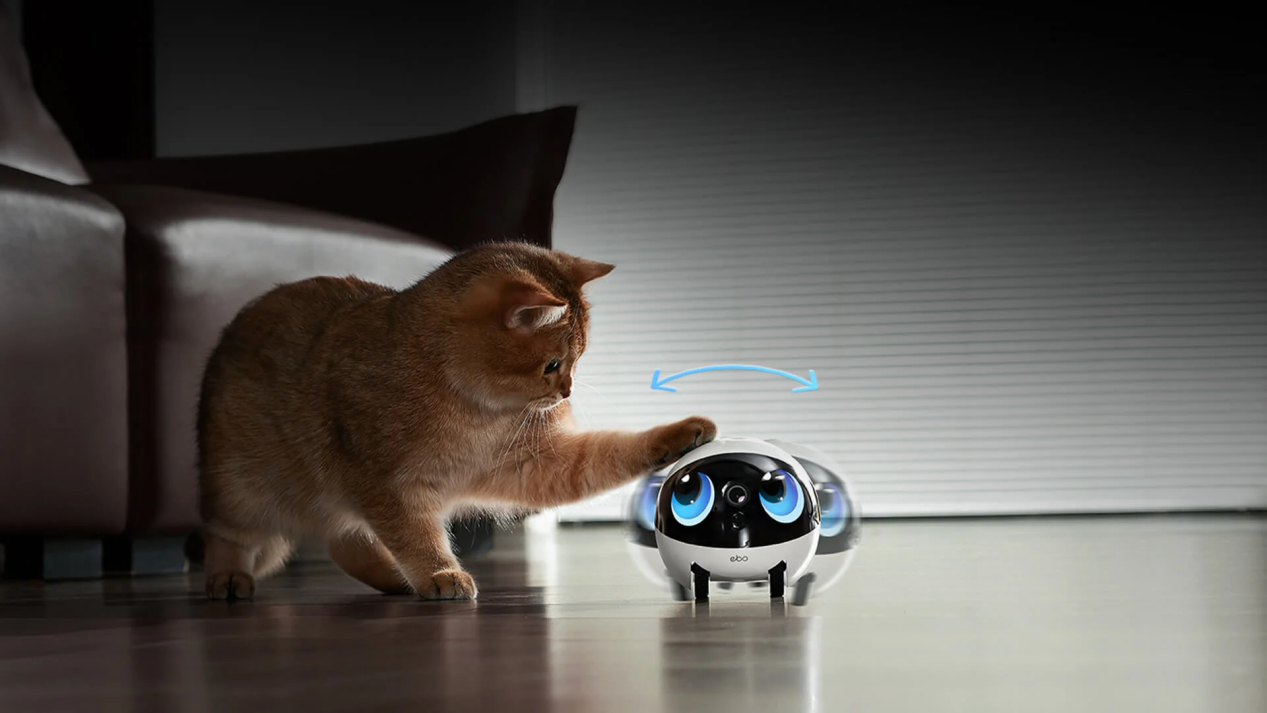
Pet creators can make its most practical use case immediately understandable.
Technology reviewers can examine mobility, video quality, charging, AI functions, and limitations.
Local creators can translate the product into the habits and concerns of their own markets.
These creators are not simply repeating the same benefits.
Each one gives the robot a different identity.
That matters because unfamiliar technology often becomes easier to understand when audiences can first recognize its role.
Amira Did Not Review the Robot. She Cast It in a Family Sitcom.
On TikTok, lifestyle and comedy creator Amira built a series of family stories around Enabot.
Instead of introducing the robot through a conventional unboxing or product explanation, she treated it as a recurring character.
In the videos, the robot is known as “Tasia.”
That single creative decision changes the way viewers process the product.
A robot is hardware.
Tasia is someone who can complain, react, make demands, and start an argument.
In one video with more than 16.4 million views, Amira prepares a small room for Tasia.
It could have been a warm family moment.
Instead, Tasia appears unhappy because the room does not have a fan, and the situation turns into a dramatic family argument.
The product remains at the center of the story, but viewers are not watching to learn about camera resolution or remote control.
They are watching the family dynamic.
Watch Amira’s first Enabot video
Another video, which received more than 17.2 million views, continues the same narrative logic.
Tasia becomes visibly excited after seeing a newer Enabot robot, especially the pink version. Amira reacts, complains, and talks to her in a way that feels closer to an everyday mother-daughter interaction than a sponsored product demonstration.
Watch Amira’s second Enabot video
The robot is not merely appearing in multiple videos.
It is developing continuity.
Viewers understand the personality.
They anticipate the reaction.
They discuss what may happen next.
That is much closer to character development than conventional product placement.
A Recurring Character Can Create Stronger Memory Than a Feature List
There is a useful creator lesson inside Amira's content.
New technology often arrives without a familiar cultural identity.
Audiences know what a phone is.
They know what a vacuum cleaner is.
They understand what a fixed security camera does.
A moving family companion robot is harder to categorize.
By turning the robot into Tasia, the content gives viewers an immediate mental model.
Tasia has a room.
Tasia wants a fan.
Tasia likes the pink robot.
Tasia participates in family conflict.
The product becomes memorable because the character is memorable.
This does not mean the functions disappear.
Mobility, voice interaction, and remote presence are still being demonstrated.
They are simply embedded inside the story.
The audience sees the robot move, respond, participate, and occupy space in the home without being asked to study a list of features.
For creators working with unfamiliar products, that distinction is important.
You can explain what a product does.
Or you can create a situation in which the audience watches it doing those things naturally.
The second approach often feels less like education, even though it may teach the audience more.
Nanoos & Reem Made the Value Obvious in 29 Seconds
Character-driven family content helps viewers care about the robot.
Pet content helps them understand why it exists.
Nanoos & Reem published a 29-second video showing Enabot moving around the home with the orange cat Nanoos.
The owner can observe the pet remotely, while the robot follows its movement and later returns to its charging dock.
The video generated roughly 3.7 million views and 380,000 likes.
Watch the Nanoos & Reem Enabot video
There is very little explanation.
That is exactly why the content is effective.
The problem and solution are visible at the same time.
The pet moves.
The robot moves too.
The owner can still see what is happening.
The robot returns to charge.
A complicated product has been reduced to a simple emotional promise:
You can still find your pet when you are away.
For pet creators, this kind of content is especially powerful because the pet already gives the video movement, unpredictability, and personality.
The robot does not need to manufacture entertainment by itself.
It only needs to remain part of the interaction.
Kiki’s Finds Showed That the Robot Could Carry a Relationship
Kiki’s Finds expanded the product beyond pet monitoring.
In her video, a husband uses Enabot to remotely check on the family dog, Sophie.
But the interaction quickly becomes a playful conversation with his wife, who responds while complaining that he is being annoying.
The robot moves around the home like a mischievous participant in the exchange.
The video received roughly 6.3 million views, 438,000 likes, and more than 70,000 shares.
Watch the Kiki’s Finds Enabot video
The dog provides the original reason to connect.
The relationship creates the entertainment.
This broadens the audience's understanding of the product.
Enabot can help someone look for a pet.
It can also carry a voice, a face, and a sense of presence from one family member to another.
The robot is acting as a remote stand-in.
Not a perfect replacement for being home, but a moving point of contact inside the home.
That idea is much more emotionally meaningful than “two-way audio.”
A specification describes the function.
A creator shows what the function feels like between two people.
The Product Became a Character Before It Became a Category
Amira's videos present Enabot as a family personality.
Nanoos & Reem show it as a pet companion.
Kiki’s Finds presents it as a remote family messenger.
These are different stories, but they all solve the same marketing problem.
They give the product a recognizable role.
This is especially useful for brands creating a new category.
When viewers do not know what to call a product, they may not know how to evaluate it.
Is Enabot a camera?
A robot?
A toy?
A communication device?
A pet accessory?
A home-security product?
The technical answer may be “all of them.”
The creative answer should usually be simpler.
In one video, it is the family member who starts drama.
In another, it is the device that follows the cat.
In another, it is the husband remotely entering the room to talk to his wife.
Creators do not need to define the entire category in every post.
They can define one role at a time.
Over multiple videos, the category becomes clearer.
Series Content Matters More When the Product Has a Personality
Many sponsored videos are designed as isolated pieces of content.
The product appears.
The creator demonstrates it.
The collaboration ends.
Character-based content works differently.
Once a robot has a name and a personality, the audience can expect another episode.
What will Tasia complain about next?
How will the family react?
Will the robot meet another device?
What happens when it interrupts another family moment?
The product can return without requiring the creator to repeat the introduction.
That continuity creates a major advantage.
The first video teaches viewers who the character is.
The second builds familiarity.
The third can expand the story.
Later videos can introduce features without feeling like the audience is being taken back to the beginning.
For AI hardware and companion products, this may be especially valuable.
The technology itself is designed around repeated interaction.
The content should reflect that.
A companion robot probably makes more sense as a recurring presence than as a one-time unboxing.
Not Every Creator Needs to Make the Robot “Cute”
Character content does not mean every creator should copy the same family-comedy formula.
The product can take on different roles depending on the creator's audience.
A pet creator can frame it as the robot that looks for the cat.
A parenting creator can explore remote family communication.
A caregiver creator can demonstrate how it might help someone check on an older relative.
A technology reviewer can test movement, connectivity, night vision, charging, and AI commands.
A lifestyle creator can show how the robot fits into the rhythm of an ordinary home.
The strongest role should come from the creator's existing world.
That is important because audiences notice when a product personality has been forced onto a channel.
A family-comedy character works for Amira because the content already revolves around dialogue, reactions, and household relationships.
A quiet pet demonstration works for Nanoos & Reem because the cat is already the center of attention.
The creator does not need to abandon their format to serve the product.
The product needs to find a credible role inside the format.
Comments Can Help Write the Robot’s Next Role
Once viewers understand the product, their questions can expand the content.
Can it move over carpets?
Will it scare the cat?
Can it find its charging dock?
Can I use it to talk to my children?
How does it work at night?
Can it move between rooms?
What happens if the Wi-Fi connection is weak?
These questions are more than objections.
They are future videos.
A pet creator can test the animal's reaction over several days.
A family creator can build a story around remote communication.
A tech reviewer can examine movement across thresholds or performance in low light.
A local creator can focus on the household concerns that matter most in their market.
For an unfamiliar category, the comment section reveals where the audience's mental model is incomplete.
Creators can fill in that gap one story at a time.
A Final Thought From InsMark
Enabot began with a practical idea:
A home camera would be more useful if it could move.
But mobility alone did not make the product culturally understandable.
Creators did that.
They placed the robot near pets.
Inside marriages.
In family arguments.
At the center of recurring jokes.
They showed viewers that the product could be a way to monitor a home, interact with a pet, speak to a family member, or simply remain present from far away.
Enabot built the robot.
Creators gave it a role in the family.
And for a new category, that role may be what makes the technology finally feel real.
Backup: info@insmarkmcns.com (kept during transition)
@insmarkmcn.com.
To verify a staff email, please contact info@insmarkmcn.comCN | Guangzhou (Headquarters) Room 1606, Tower B, Nimble Center, CBD, Guangzhou, China
HK | Hong Kong (Headquarters) The Centrium, 60 Wyndham Street, Central, HKCentral, Central, Hong Kong SAR
US | New York DE | Berlin