
Why Millions Are Watching People Sleep in a "Dog Bed" — And What Creators Can Learn from Plufl’s $10M Breakout
You’ve probably seen it by now: oversized, plush dog-bed-looking mats… but made for humans. The product? Plufl — a “human dog bed” that’s racked up over $10 million in revenue, with TikTok views soaring past 380 million.
Sounds like a corporate gimmick? Actually, it started with two college friends, a giant Great Dane, and a question:
What if humans could experience the same comfort as a dog taking a nap?
Here’s why Plufl blew up — and what it means for you as a creator.
The Story Behind the Viral “Human Dog Bed”
Back in 2021, Noah Silverman and Yuki Kinoshita, two students from the University of British Columbia, stumbled upon their business idea while chilling in a café. One saw a Great Dane curled up in a cozy dog bed, and the lightbulb went off. What if this level of comfort was available for humans — especially those dealing with anxiety, ADHD, or chronic stress?
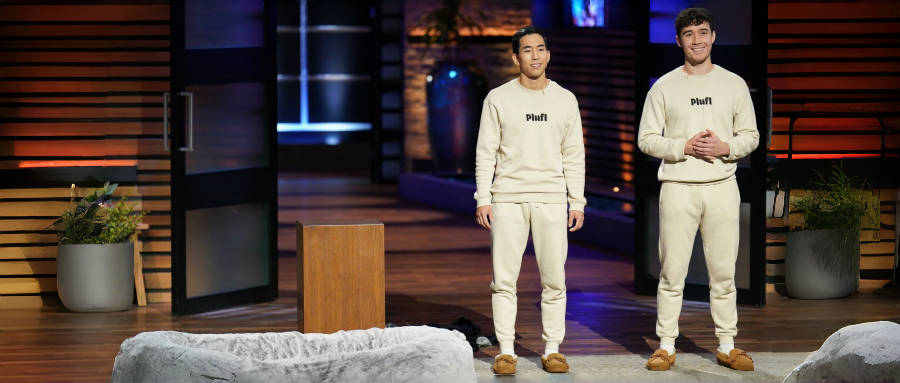
Sleep deprivation is a serious issue in the U.S., affecting up to 70 million people. So their idea wasn’t just quirky — it was rooted in a real need for emotional and physical relief.
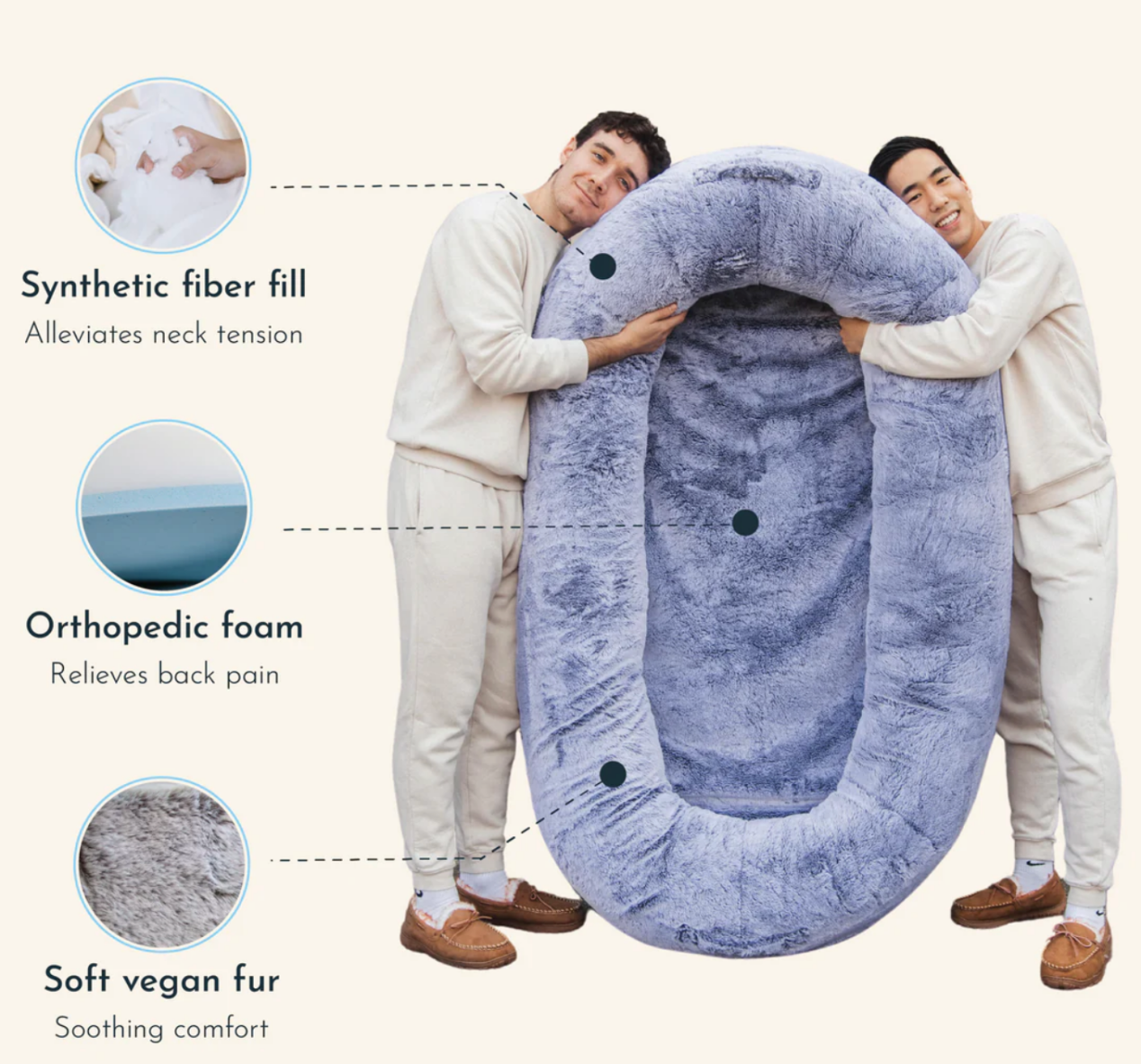
Their answer? Plufl: A 4-inch orthopedic memory foam bed with faux fur, bolster-style borders that “hug” you, anti-anxiety pocket details (yes, there’s one for snacks), and a vibe that feels like a weighted blanket’s more evolved cousin. Oh, and it’s pet-friendly and CertiPUR certified.
It wasn’t a joke. It was designed comfort, wrapped in a playful, social-friendly concept.
TikTok Wasn’t the Add-On — It Was the Strategy
Their first sales came from a DTC website. But at $499 per bed, traffic was slow and conversion was even slower. Instead of slashing price, the founders leaned into storytelling — specifically, creator-style content on social platforms.
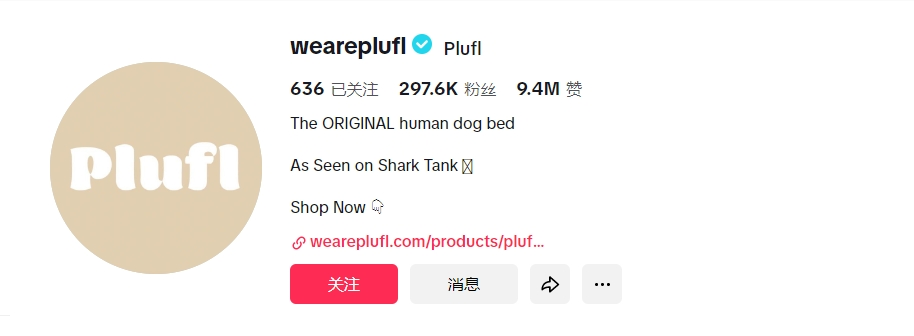
They built Plufl’s TikTok account (@weareplufl), posted skits, POVs, reaction replies, and unboxing-style humor. The founders themselves appeared on camera — acting goofy, testing the bed, replying to comments, and becoming the brand’s unofficial mascot. This wasn’t a brand account. This was an IP-based creator channel, run by the brand itself.
It worked. @weareplufl now has:
297K followers
Over 9.4M likes
Multiple viral videos with over 3M views each
Takeaway for creators: People don’t follow brands. They follow personalities. Even a quirky product can go viral when a human face owns the storytelling.
Linzy Taylor’s Video Didn’t Just Go Viral — It Sold
Let’s talk about one of the smartest creator-brand collabs we’ve seen in a while.
Enter: @thelinzytaylor, a TikTok lifestyle creator with 1.9M followers. In her sponsored post, she unboxes the Plufl bed and jokes about how she prefers sleeping in it over sharing a bed with her husband. Funny, real, totally on brand for her audience.
The result?
4.1M views
7.4K+ shares
Thousands of comments and DMs asking where to buy
Watch it: @thelinzytaylor's TikTok for Plufl
Lesson here? A great creator doesn’t just say “buy this.” They tell a story that triggers curiosity, relatability, or debate.
Plufl’s Creator Strategy Wasn’t About “Features” — It Was About Feelings
Let’s be honest: no one buys a $500 floor bed for the foam specs.
Plufl focused their content (both brand-side and creator collabs) around a single emotion: the joy of guilt-free laziness. Like a puppy sprawled out after zoomies. They didn’t pitch a product. They pitched a mood — and made creators the main narrators.
That’s why they worked mainly with lifestyle creators who could make fun, chill, cozy content — not just small KOCs doing talking-head reviews. Their creator filter was:
“Can this person make doing nothing look like the dream?”
If you’re a creator wondering how to get brand deals, that’s a powerful niche: comfort, cozy aesthetics, slow living, stress relief. It’s not about luxury — it’s about vibe.
From Shark Tank to TikTok Shop: Multi-Layered Strategy Done Right
After going viral, Plufl appeared on Shark Tank and secured a $200,000 investment. But they didn’t stop there — they repurposed the TV content into short-form clips that went viral again on TikTok.
Meanwhile, they tested TikTok Shop, and one simple video announcing a limited-time $299 discount racked up 4.2M views. That converted straight into sales — and eventually pushed Plufl past the $1M mark in GMV within 3 months.
Creator tip: If you’re promoting a product with TikTok Shop, time your content with limited drops or promos — urgency fuels views and clicks.
So, What Can You Learn as a Creator?
If you’re looking to land paid partnerships — or want to pitch brands directly — this is the kind of case study to study inside out.
Humanize the product — act like the audience, not a salesperson
Lean into humor or real life — make it feel native, not forced
Target feelings, not features — what mood or moment does this product enable?
Be part of the brand’s content flywheel — let them repost your content; it helps everyone
Use comments as content prompts — reply videos are built-in goldmines
Final Word from InsMark
We’ve seen hundreds of creator-brand collabs, and Plufl is one of the cleanest examples of using storytelling + creator power to sell a concept — not just a product.
If you’re a creator who loves aesthetic content, chill humor, or lifestyle storytelling, this is the kind of brand to look out for. And this is the kind of content that converts — for both sides.

Backup: info@insmarkmcns.com (kept during transition)
@insmarkmcn.com.
To verify a staff email, please contact info@insmarkmcn.comCN | Guangzhou (Headquarters) Room 1606, Tower B, Nimble Center, CBD, Guangzhou, China
HK | Hong Kong (Headquarters) The Centrium, 60 Wyndham Street, Central, HKCentral, Central, Hong Kong SAR
US | New York DE | Berlin